The U.S. Supreme Court has issued a major ruling on gun rights and marijuana use. On June 18, the Court ruled that regular marijuana use alone is not enough to support a criminal charge for firearm possession.
The unanimous decision limits how the federal government can apply a long-standing gun law. The case centered on the Gun Control Act of 1968. Under that law, it is a felony for anyone who is "an unlawful user of or addicted to any controlled substance" to possess a firearm.
The Supreme Court did not strike down the law. Instead, it ruled that the government cannot apply it too broadly.
Supreme Court Draws a Clear Line
Justice Neil Gorsuch wrote the Court's opinion. He described the ruling as narrow and limited.
The decision does not affect laws that restrict firearm access for convicted felons. It also does not address cases involving drug addiction. In addition, it leaves room for the government to act when drug use creates a genuine public safety risk.
The Court focused on one question: Can the government prosecute someone simply because that person uses marijuana a few times a week?
The justices said no.

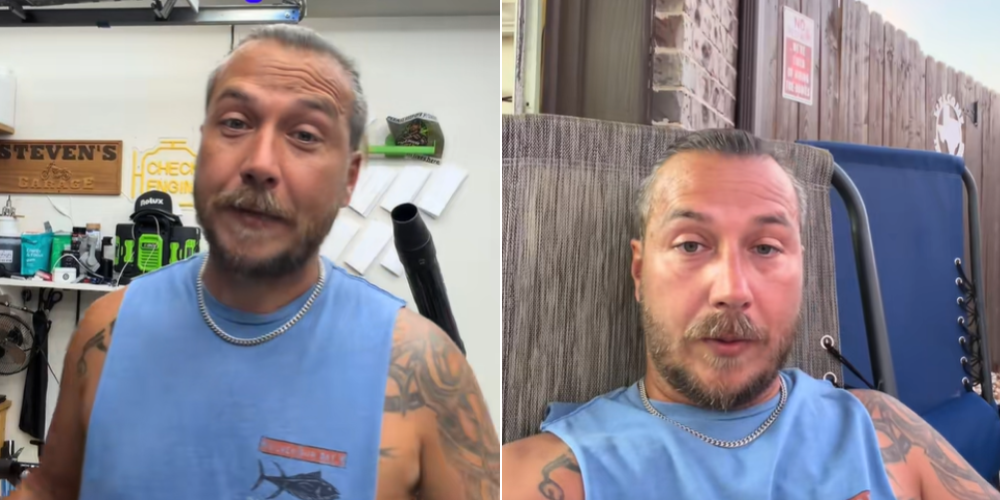
Instagram | wmbbnews13 | Gorsuch ruled that regular marijuana use alone is not grounds for imprisonment or losing gun rights.
Gorsuch wrote that the government cannot imprison someone or take away gun rights solely because that person regularly uses marijuana.
"In saying this much, we do not question that sometimes an individual's unlawful use of marijuana (or any other controlled substance) may render him a danger to others," Gorsuch wrote.
"But, again, the government disclaims the need to show anything like that in this case."
How the Case Reached the Supreme Court
The case involved Ali Hemani, a dual citizen of the United States and Pakistan.
At the time of his arrest, the FBI monitored Hemani because of an alleged connection to Iran's paramilitary Revolutionary Guard. The U.S. government has designated the group as a global terrorist organization.
Federal agents searched Hemani's Texas home in 2022. During the search, Hemani told agents that he owned a Glock 9mm pistol. He also said he used marijuana "about every other day."
Prosecutors tried to pursue more serious allegations. Those efforts did not result in charges. Instead, authorities charged Hemani with possessing a firearm while being an unlawful marijuana user.
The charge carries a maximum prison sentence of 15 years.
Appeals Court Backed the Gun Owner
Before reaching the Supreme Court, the case went before the 5th U.S. Circuit Court of Appeals in New Orleans.
The appeals court ruled in Hemani's favor. Judges relied on a 2022 Supreme Court ruling that requires gun laws to remain "consistent with this nation's historical tradition of firearm regulation."
The court found support for restricting firearm possession by people who are currently intoxicated. However, judges found little historical support for disarming a sober person because of past substance use.
The Department of Justice challenged that ruling. Government lawyers argued that early American laws sometimes restricted habitual drinkers, even when they were sober.
Arguments Presented to the Justices
Erin Murphy represented Hemani before the Supreme Court.
Murphy argued that historical laws treated drinkers and drunkards differently. According to her, lawmakers focused on dangerous behavior rather than simple alcohol consumption.
During oral arguments in March, Murphy said the current law reaches too far.
"The modern law can't sweep so broadly to capture something that is the type of thing that people regularly, all throughout the country, lawfully use a few days a week," she told the Court.
Murphy also pointed to changing views on marijuana.
"And most states and the president have made the judgment that this is not so categorically addictive or dangerous that no one can use it safely," she said.
Today, most states allow cannabis use in some form. At the same time, federal officials continue efforts to move marijuana into a less restrictive drug category.
Gorsuch Examines American History
Historical firearm laws played a major role in the Court's analysis. Gorsuch rejected the government's comparison between marijuana users and habitual drunkards from early American history.
He wrote that the historical laws "targeted different kinds of people, did so for different purposes, and operated in different ways."
The opinion also highlighted the habits of several Founding Fathers.
According to Gorsuch, John Adams drank a tankard of hard cider with breakfast. Thomas Jefferson often enjoyed three or four glasses of wine at dinner.
"Had habitual drunkard laws applied to those who simply drank regularly," Gorsuch wrote, "many notable early Americans could have faced trouble."
The justice also noted the federal government's changing position on marijuana. He wrote that those policy shifts make it difficult to claim that millions of Americans who use marijuana are automatically dangerous.
Advocacy Groups React
Several organizations supported Hemani's position. That group included gun rights advocates, cannabis reform supporters, and the American Civil Liberties Union.
Cecillia Wang, legal director of the ACLU, welcomed the ruling.
"With nearly half of Americans reporting marijuana use at some point in their lives, this ruling protects the rights of millions and curbs the government's ability to impose arbitrary and discriminatory penalties," Wang said.
Gun safety groups disagreed with the outcome. Still, they praised the Court for keeping the ruling narrow.
Janet Carter, an attorney with Everytown Law, said the decision leaves room for prosecutors to act when evidence shows a clear danger. She also noted that the Court recognized the risks that can arise when drugs and firearms mix.
Federal Law Remains in Place

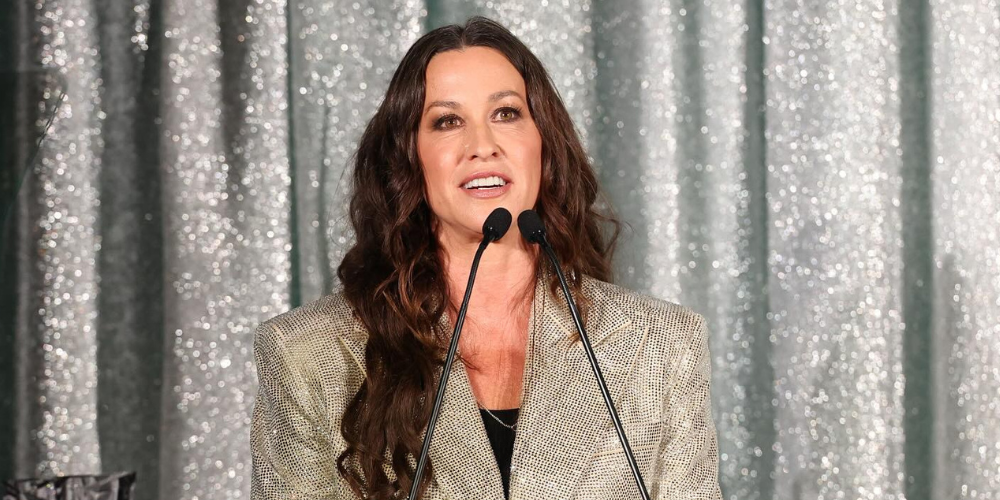
Instagram | laistofficial | The Supreme Court's ruling requires more than mere marijuana use for the government to penalize gun owners.
The National Association of Criminal Defense Lawyers criticized the federal statute at the center of the case.
The organization argued that prosecutors often use the law as leverage in plea negotiations. It also claimed that authorities sometimes rely on the charge when stronger allegations fail.
According to the association, Hemani's case highlights that concern. The group argued that prosecutors pursued the firearm charge after other theories failed.
The Department of Justice rejected that argument.
Government lawyers told the Court that more than 300 people face charges each year for possessing firearms while using controlled substances or while struggling with drug addiction.
The DOJ said the law "plays an integral role" in keeping firearms away from dangerous or irresponsible individuals.
Congress passed the Gun Control Act of 1968 after the assassinations of Robert F. Kennedy and Martin Luther King Jr. Lawmakers designed the law to strengthen federal firearm regulations.
What This Decision Means
The Supreme Court's ruling does not give all drug users unrestricted firearm rights. The decision focuses on a narrower issue. It requires the government to show more than regular marijuana use when seeking criminal penalties under federal gun laws.
The ruling could shape future legal battles involving the Second Amendment and federal drug policy. It may also influence how courts evaluate firearm restrictions in the years ahead.
The issue has already drawn national attention. Hunter Biden faced a conviction in 2024 for purchasing a firearm while having a known drug addiction. President Joe Biden later granted him a pardon during the final weeks of his presidency.
As marijuana laws continue to change across the United States, courts will likely face new questions about where constitutional gun rights and federal drug regulations intersect.